
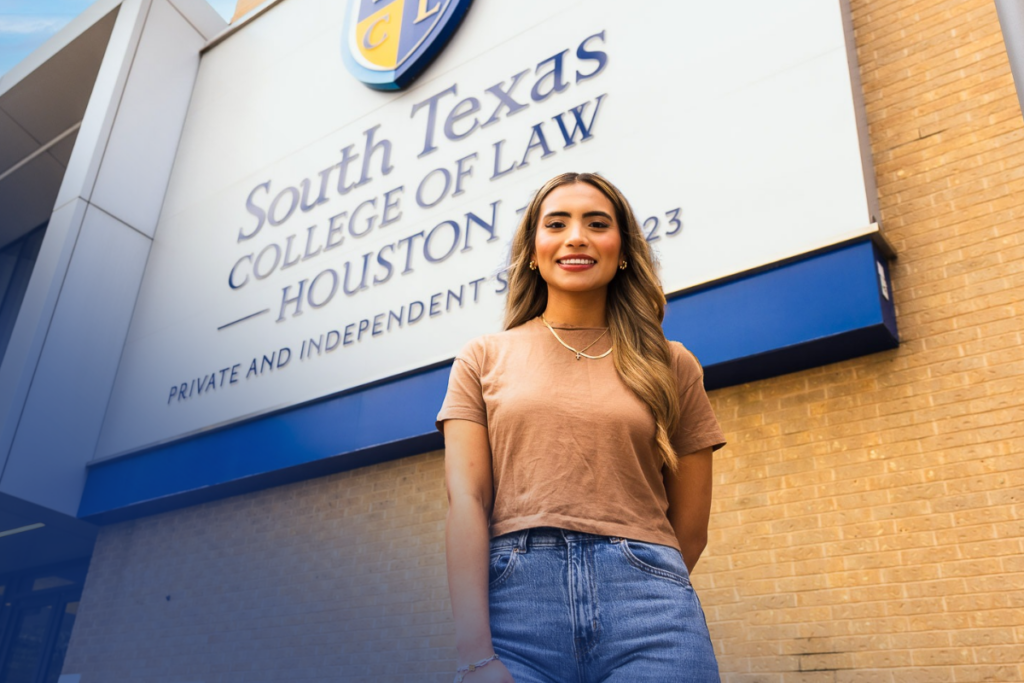
In 1923, Houston was a city of roughly 150,000 people and jazz was just beginning to flourish. That fall, a new door opened at the downtown YMCA, offering working professionals a chance to study law after the workday ended.
That school became South Texas College of Law Houston. A century later, it counts 17,000 living alumni, a national reputation for advocacy, and a lasting place in the story of this city’s legal community.
Founded by Houston’s Business and Legal Leaders
STCL Houston began as a civic project. Prominent Houston leaders, working through the YMCA, saw a fast-growing city and set out to give working professionals access to an exceptional legal education.
Oil fueled the demand. Houston’s booming energy industry needed lawyers to handle the business of producing, transporting, refining, and marketing oil, yet only two accredited law schools existed in Texas: the University of Texas and Baylor University.
The YMCA’s board, which included several attorneys, was confident Houston needed a law school. Many of the city’s finest legal minds joined an advisory council, and some of their names still appear on firms today.
The First Night of Class
On September 24, 1923, the school opened for evening classes with seven part-time instructors and 34 students, five of them women. The YMCA building sat at the corner of Fannin and McKinney streets.
Conditions were humble: a single room, wooden fans hanging from the ceiling, and armchairs that doubled as desks. The ambition, however, was anything but modest.
Photographs in the law library’s archive show the original Board of Governors, a who’s who of Houston attorneys who shaped and governed the young school.
Judge Joseph C. Hutcheson Jr., a founder who later became chief judge of the U.S. Court of Appeals for the Fifth Circuit, served as the first dean from 1923 to 1931.
From Night School to National Contender
Growth came quickly. By 1945, when the school took the name South Texas College of Law, its enrollment had topped that of the University of Texas School of Law for the first time.
Accreditation followed: provisional approval from the American Bar Association in 1959 and full approval in 1969. In the 1960s, the school also became the first law school in Texas to award the Juris Doctor degree.
Independence arrived in 1967, and the campus now fills an entire city block at 1303 San Jacinto Street. A 2016 name change to South Texas College of Law Houston put its home city front and center.
17,000 Living Alumni, One Powerful Network
Few law schools can point to a legacy like this. Seventeen thousand living alumni carry the South Texas Law name into courtrooms, boardrooms, and government offices across the country.
Having access to South Texas Law’s extensive network of alumni can potentially support you throughout your career. Graduates hire, refer, and mentor one another, and the alumni community stretches across 49 states and five countries, opening doors long after graduation.
Each year, the Alumni Association honors standout graduates at an Alumni Awards Luncheon during Alumni Weekend, celebrating public servants and rising young lawyers alike.
For a first-year student, the network means access. For a recent graduate, it means a call that gets returned. For a seasoned attorney, it means a community that keeps growing.
Alumni Who Lead from the Bench, the Boardroom, and Beyond
The outcomes speak for themselves. The law school counts Texas Supreme Court justices among its alumni, including David M. Medina, who served on the court from 2004 to 2012.
On the federal bench, Judge Drew Tipton ’94 has served on the U.S. District Court for the Southern District of Texas since 2020. Closer to home, Judge Christine Weems ’00 presides over the 281st Civil District Court in Harris County.
The law school has educated thousands of alumni judges, along with partners at large and independent firms, public service attorneys, general counsels of international corporations, and Fortune 500 CEOs.
Recent graduates are following a similar path. In 2025, Garrett Gray ’23 and Mattie Vázquez ’24 clerked at the same time for justices of the Supreme Court of Texas.
Downtown Houston: A Front-Row Seat to the Law
Location has always been part of the strategy. The founders chose downtown because it kept students close to their workplaces and the courthouses, and that logic holds true today.
South Texas Law is the only law school located in downtown Houston, in the heart of the nation’s fourth-largest city. Students step from class into a legal market packed with courts, firms, agencies, and corporations.
Each year, hundreds of legal employers recruit students through on-campus interviews and resume collection programs, and a judicial program connects students with internships in judges’ chambers.
Educating the Region’s Judges and Lawyers
For decades, this school has helped shape the people who keep Houston’s legal system running. Its graduates have tried cases, prosecuted crimes, drafted contracts, counseled families, and taken the bench across the region.
Judges return to campus, too. At annual Bench and Bar events, an active judge swears in alumni who recently passed the bar exam. Judges also serve on panels discussing topics of interest to current students and alumni, and they sometimes serve as adjunct professors.
That continuity matters in a region this large. Houston’s legal community depends on a steady pipeline of practice-ready lawyers, and the law school has supplied it for more than a century through full-time and part-time programs.
Faculty Who Teach, Coach, and Mentor
Excellent teaching has anchored the law school since day one. Early faculty included Judge Hutcheson and Sam Streetman, a former Texas appellate judge who helped found the school and served as its second dean.
Generations of professors and program leaders have followed, blending scholarship with courtroom savvy. In one well-known example, the late T. Gerald Treece led the advocacy program as it grew into a national force, earning its first national championship in 1979.
Mentoring extends beyond the lecture hall. At the fall 2025 commencement, student commencement speaker Tevin Long ’25 noted that professors give students guidance outside the classroom, and alumni return to mentor and coach them.
Advocacy Champions and Rising Rankings
South Texas Law’s advocacy program ranked sixth in the nation in the 2025-26 U.S. News & World Report specialty rankings, and it is one of the few programs consistently placed in the top 10.
Student teams have won 148 national championships in moot court and mock trial, more than any other law school. These victories include 15 American Bar Association National Appellate Advocacy titles, also the most in the nation.
In 1993, after a fourth straight ABA appellate title, the association retired its national trophies for best team and best brief to the school.
Legal writing shines, too. STCL Houston has claimed five first-place Best Brief awards in the Scribes competition, the nation’s most prestigious legal writing contest, and no other school has won it more than once.
The overall ranking is also climbing, after the team’s recent wins. In 2025-26, the law school rose 10 spots to 128th on the strength of bar passage and career outcomes, while dispute resolution tied for 24th and legal writing tied for 36th.
President and Dean Reynaldo “Rey” Anaya Valencia says recent bar passage and career outcomes both top 90 percent, and adds that rankings are not the school’s primary benchmark of success.
Learning Practical Skills
Rigor meets real-world experience at STCL Houston. Students gain lawyering skills by participating in clinics, competitions, and dispute resolution programs. The Transactional Practice Center – launched in 2004 – helps graduates hit the ground running in transactional work.
Clinics put students in front of real clients. For example, the Landlord/Tenant practice helped more than 5,000 people facing housing instability, and the Low-Income Taxpayer Clinic ensures individuals and families have accurate and helpful guidance regarding tax matters.
Dispute resolution shines, too. The Frank Evans Center for Conflict Resolution helped earn a 2021 “Top Law School for ADR” nod from preLaw magazine.
An intensive Bar Prep Program helps students pass the exam on the first attempt. And since 2022, a part-time, primarily online schedule has let students earn the J.D. from anywhere, widening the doorway to the profession.
A Community That Serves
Diversity is central to the school’s mission, and South Texas Law is known as one of the nation’s most diverse law schools. Different backgrounds sharpen debate and prepare graduates for the clients and colleagues they will meet.
Service runs deep as well. The Texas Access to Justice Commission has honored the law school four times in the award’s 11-year history for its commitment to pro bono service, including in 2025.
The Next Century Starts With You
In 2023, STCL Houston celebrated its 100th year with events, guest speakers, a gala that supported scholarships, a special website section, and a tribute in InRe magazine. The real celebration, though, is what the school does as it advances into its second century.
For alumni, that means staying connected, mentoring students, and sharing your success. For prospective students, it means joining a legacy where rigorous education, experiential learning, and a powerful network prepare practice-ready attorneys.
A hundred years ago, Houston’s leaders built a law school for the people who would build the city’s future. That legacy of excellence still drives South Texas Law. Visit stcl.edu to see how you can add your story to ours as we educate the future leaders of the legal profession.