
As we wish a happy Veteran’s Day to all the men and women who have served our nation, we pay tribute to the lasting influence of veterans on South Texas College of Law Houston. Military veterans have long been a part of the very fabric of our law school. Since its founding in 1923, former service members have shaped its history and character.
Some came to the law school as lawyers to serve as administrators and professors. They were instrumental in building South Texas Law’s programs and reputation. Their military experiences not only informed their own legal careers, but also strengthened the school’s academic community and left a lasting institutional legacy.
Others came to South Texas Law as students and pursued a career in law strengthened and informed by their experiences in uniform. A smaller, but equally important group of veterans became interested in military service while studying law and joined one of the branches as military attorneys.
Their stories illustrate a continuing connection between military service and legal education — one that encompasses institutional leadership, trial advocacy, and public service.
From the Battlefield to the Classroom
Dean Garland R. Walker
Ten days after graduating from Texas A&M University in 1943, Walker reported for active duty in the U.S. Army. He was critically wounded on Omaha Beach during the D-Day invasion on June 6, 1944. Following 27 months of recovery in a military hospital, his injuries forced him to abandon his original plans for a career as a surgeon. He decided to become a lawyer instead, graduating from the University of Texas School of Law in 1948.

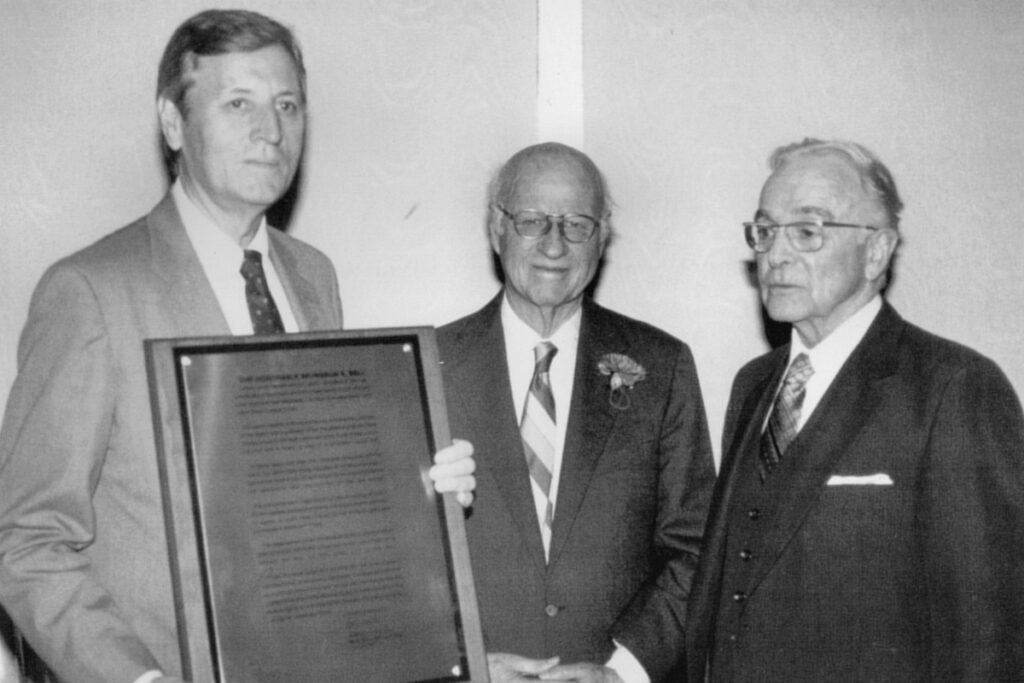
Walker joined the South Texas faculty in 1959 and served as the school’s dean from 1968 to 1984. During his tenure, the school underwent a monumental transformation. He oversaw its evolution from a local night school into a fully ABA accredited institution offering the first J.D. degree in Texas, while other schools still awarded the LL.B.
Other significant advancements occurred under Walker’s leadership: enrollment climbed to make South Texas Law one of the largest law schools in the U.S., the campus expanded its footprint twice, and a nationally recognized powerhouse advocacy program was born. The Garland R. Walker Memorial Mock Trial Competition continues to honor his legacy.
Walker’s journey demonstrates how military service can shape a person’s understanding of resilience, responsibility and leadership — qualities that would become central to his work educating future lawyers.
Spurgeon E. Bell
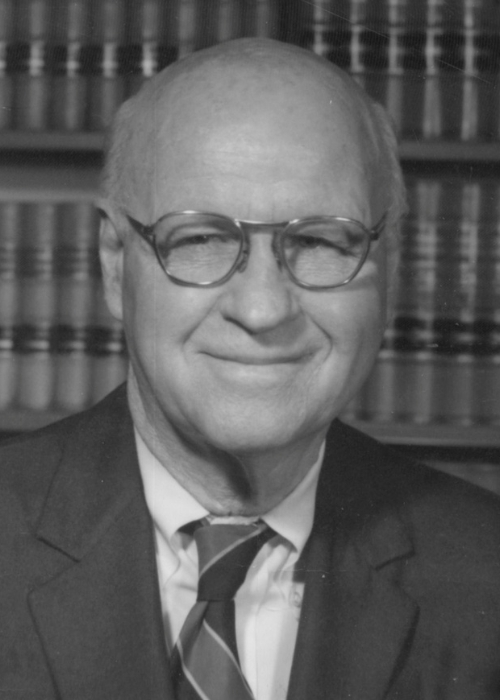
Another influential figure, Spurgeon E. Bell, interrupted his teaching career to serve as a lieutenant in the U.S. Navy Judge Advocate General’s Corps during World War II. After the war, Bell returned to Houston and resumed teaching at South Texas Law.
Bell later became chief justice of the First Court of Civil Appeals and chairman of the law school’s Board of Trustees. Over more than five decades of teaching, he became a defining figure in the school’s academic history, and one of the school’s most beloved professors.
His legacy endures through the Spurgeon E. Bell floor in the Fred Parks Law Library and the annual Spurgeon E. Bell Memorial Moot Court Competition, which takes place each spring semester.
Fred Parks ’37
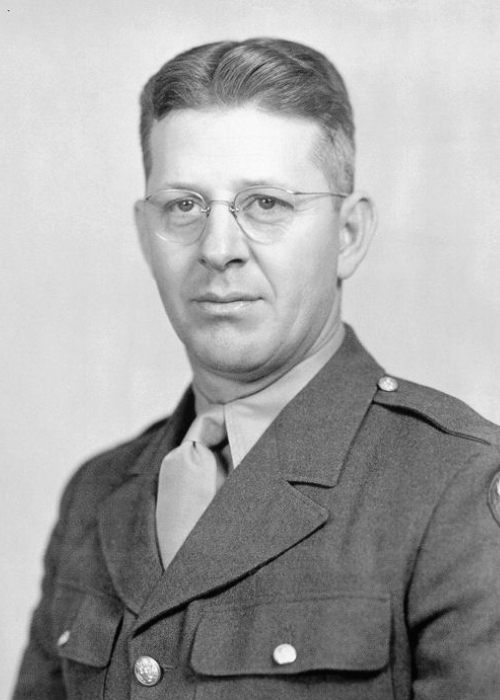
Alumnus Fred Parks, a member of the Class of 1937, served in the U.S. Army Air Corps’ Judge Advocate General’s Corps in Europe during World War II. Following his military service, he resumed building his legal practice and became an immensely successful attorney. His prominence in the courtroom allowed him to become an important benefactor to the school, ultimately donating more than 15 million dollars to South Texas College of Law Houston. The Fred Parks Law Library, a central resource for generations of South Texas students, bears his name. Dedicated on November 14, 2001, it is currently celebrating it’s 25th anniversary.
Other key figures:
Dean Edgar E. Townes: A foundational patriarch of the school, Townes served as dean of South Texas College of Law Houston from 1934 to 1960 and was deeply involved in its early expansion. While he did not serve as a member of the armed forces during World War II, he made significant civilian contributions to the war effort. His administrative work was recognized when he was awarded the Selective Service Medal for his service to the nation.
His strategic administrative guidance helped steady the law school through the massive influx of returning service members seeking to use the newly passed 1944 GI Bill.
John C. Jackson: Jackson, a World War I infantry officer who became general counsel for Texaco, stepped into leadership roles at the law school following his extensive and distinguished corporate legal career. Serving as dean from 1960 to 1968, he prioritized stabilizing the school’s faculty infrastructure, expanding academic resources, and beginning the process of transitioning South Texas Law’s night-school program into a fully formalized, accredited law school.
Preparing the Next Generation of Military Attorneys
South Texas Law students who choose to combine their J.D. with military service after graduation become part of a long-standing tradition.
Over the last 20 years, faculty advisors with extensive military legal experience have helped 85 students become officers in the Judge Advocate General’s Corps (JAG Corps). Achieving one of the highest placement totals in the nation has earned STCL Houston a reputation for placing well-educated graduates into the highly competitive JAG pipeline.
The JAG Corps provides legal services and counsel to the U.S. armed forces. Military attorneys advise commanders, handle criminal prosecutions and defenses, provide legal assistance to service members and their families, and work in fields including administrative law, national security, military justice, and operational law.
Becoming a JAG officer requires more than earning a law degree. Applicants must navigate a exacting selection process and meet the applicable requirements of their military branch. South Texas Law helps students explore this path through faculty mentorship, career guidance, practical legal training, and opportunities to gain firsthand exposure to military law.
Some former and current faculty members with military legal experience:

Dean Emeritus Donald J. Guter retired from the U.S. Navy with the rank of rear admiral. For two years, he was the 37th Judge Advocate General of the Navy. As the top lawyer for the service, he provided legal guidance to the Secretary of the Navy, Chief of Naval Operations and Department of the Navy.
Guter oversaw 1800 active duty, reserve and civilian attorneys and 1000 paralegals in the United States Navy. He brought his understanding of leadership and legal service to his work as the law school’s president and dean from 2009 to 2019. He worked closely with faculty members to help students aspiring to become JAG officers prepare for success.
Professor Geoffrey Corn, formerly of South Texas Law and now at Texas Tech University School of Law as the director of the Center for Military Law and Policy, acted as mentor and strategist for students aspiring to enter the hyper-competitive Judge Advocate General’s (JAG) Corps across all branches of the military.
As a retired U.S. Army Lieutenant Colonel and former faculty member at the U.S. Army JAG School, Corn leveraged his deep inside knowledge of military justice to position STCL Houston students for success through mentorship, selecting them as his research assistants, and encouraging participation in specialized, military-focused advocacy competitions.
Professor Matthew Festa, is a former JAG officer with a 20-year career in the U.S. Army. He served in various positions, from platoon leader in the 101st Airborne to professor at the JAG school. Festa brings his first-hand military knowledge to the students he teaches in courses on International Law of Armed Conflict and National Security Law.
Serving as a mentor to South Texas Law students interested in military legal careers, Festa coaches teams who compete in military-focused, simulation-style advocacy tournaments. His students recently participated in the Army Criminal Court of Appeals Competition and brought home the national championship trophy from the Red Cross Clara Barton International Humanitarian Law Competition.
Festa carries on the JAG officer preparation tradition that Guter and Corn piloted at South Texas Law. He is especially supportive of the students who want a career in military law and is proud of the role South Texas Law plays in creating a pipeline of bright young attorneys to the JAG Corps.
Terri R. Zimmermann, long-time adjunct professor at South Texas Law, is currently a JAG officer with decades of experience. She holds the rank of Colonel in the U.S. Marine Corps Reserve. She has served in various leadership and judicial positions, including military trial judge, appellate military judge, Reserve Chief Defense Counsel of the Marine Corps, and Reserve Chief Trial Counsel of the Marine Corps.
Through her private civilian practice, Zimmermann and Zimmermann PLLC, she provides expert legal representation to clients facing criminal charges in state, federal, and military courts
Recent South Texas Law Alumni in the JAG Corps
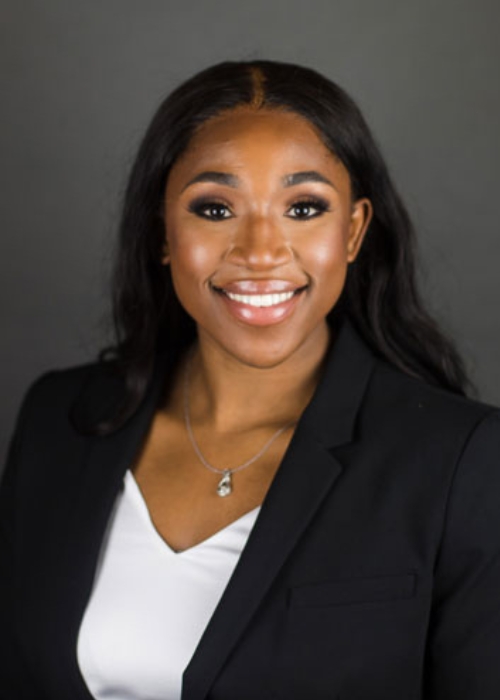
Heaven Smith ’22 pursued her goal of becoming an Army JAG after discovering the opportunity to combine her interest in military service with a legal career. Faculty mentorship helped her navigate the process, and a summer internship at the Army’s Aviation Center of Excellence in Fort Rucker, Alabama, gave her valuable exposure to military legal work.
Mai Pham Bayless ’21 and Aby Lukose ’21 pursued Army JAG careers after graduating. Bayless credited her South Texas coursework, trial advocacy training, career panels, and other law school experiences with helping prepare her for military service.
Lukose explored military law through the Clara Barton International Humanitarian Law Competition, where students analyze operational scenarios and advise on the legal considerations surrounding military responses. He also worked as a research assistant, contributing to scholarship involving criminal law and national security. Internships, professional connections, and opportunities to observe military attorneys helped him develop a clearer understanding of the profession.
South Texas Law has connected students with military justice through opportunities to observe proceedings, including a live hearing of the U.S. Army Court of Criminal Appeals hosted at the school. Experiences such as these bring military law into the classroom and allow students to observe appellate advocacy in action.
For aspiring JAG officers, the school’s longstanding emphasis on courtroom advocacy, legal research, writing and practical problem-solving offers a valuable foundation. These skills are central to military legal practice, where attorneys must communicate clearly, analyze complex questions, and provide sound advice in demanding circumstances.
From Military Service to Distinguished Careers to Public Service
Discipline, leadership skills, and sense of duty developed through military service give veterans an advantage in civilian practice and public service.
Maria Chapa Lopez ’86 earned her J.D. from South Texas College of Law Houston, then entered the U.S. Army Judge Advocate General’s Corps, rising to the rank of lieutenant colonel. Following her military service, Lopez joined the U.S. Department of Justice, spending nearly two decades as a federal prosecutor before serving as deputy attaché at the U.S. Embassy in Mexico City, where she coordinated international efforts to combat organized crime, drug trafficking and human trafficking.
Lopez reached another career milestone when she was appointed the 20th U.S. Attorney for the Middle District of Florida, leading more than 200 attorneys and professionals across five offices. Since leaving that position in 2021, she has continued her commitment to public service through mentoring South Texas Law students and training young lawyers and judges throughout Latin America in partnership with the United Nations.
Today, she brings that wealth of military, legal and leadership experience full circle as a member of the South Texas College of Law Houston Board of Directors.
Joe Gutheinz ’96 is a former U.S. Army intelligence officer and helicopter pilot. After his military service, he became a senior special agent for NASA’s Office of Inspector General. His work brought him to Houston, and his desire to follow in his father’s footsteps as a soldier-turned-lawyer brought him to South Texas Law as a part-time night student.
Gutheinz gained national and international attention for the Moon Rock Project, an investigation aimed at recovering stolen lunar artifacts. A reporter for The New York Times nicknamed him “The Moon Rock Hunter.”
Now in private practice with his two sons (both of whom are veterans and South Texas Law alumni), he is a highly sought-after speaker at legal and space-related conferences. He serves on the STCL Houston Alumni Association Board of Directors.

Eric D’Olive ’11 is a former squad leader in the U.S. Army’s 82nd Airborne Division. Joining the service during the Iraq war, he successfully transitioned from soldier to law student to attorney. D’Olive is now general counsel for an investment firm.
He continues to make full use of what he learned about planning and preparation during his military service, and he brings that to bear on his job as a corporate lawyer. He serves on the South Texas Law Alumni Association Board of Directors and is a mentor of students.
D’Olive believes veterans often succeed as law students and as attorneys because of their training. The confidence and maturity they gained as soldiers translates into the ability to stay focused and maintain perspective when faced with the unexpected.
These alumni represent different paths, but their experiences underscore how military service can inform a lifelong commitment to professionalism, public responsibility, and leadership.
Support for Veterans on Campus
South Texas College of Law Houston’s relationship with and support of veterans is long-standing. In the years immediately following World War II, the recently enacted G.I. Bill gave former military members generous educational benefits. South Texas Law welcomed these veterans and developed special programs to help them afford legal education.
Although the government benefits program has waxed and waned over the years, the law school has maintained its support of military-connected students.
South Texas Law participates in the U.S. Department of Veterans Affairs’ Yellow Ribbon Program and certifies eligible students for federal veterans’ education benefits. That means some eligible veterans have close to zero out of pocket expenses for tuition; others have very low costs. The Commander Steve Bozeman Scholarship for Veterans offers an additional institutional source of financial support.
There is also a social component to supporting students who are military veterans. The Veteran Law Students Association (VLSA) is a school sanctioned student organization that provides a community for students with military backgrounds, creating opportunities for mentorship, professional networking, and mutual support.
A Continuing Legacy
The history of South Texas College of Law Houston is, in part, a history of people who transformed service into lasting contributions. Veterans have helped shape its teaching, strengthen its advocacy tradition, support its growth and create opportunities for future students.
Their legacy lives on in the library that bears Fred Parks’ name, the competitions honoring Spurgeon Bell and Garland Walker, the accomplishments of veteran alumni and the graduates who continue to serve as military attorneys.
As South Texas Law honors the nation’s veterans, it also recognizes their enduring influence on the institution and the communities its graduates serve. Their example affirms that a commitment to service does not end when military duty concludes. It can continue through the pursuit of justice, the rule of law and the preparation of future generations of lawyers.